Bold Mural Wall Covered and Sale-Ready With Paneling
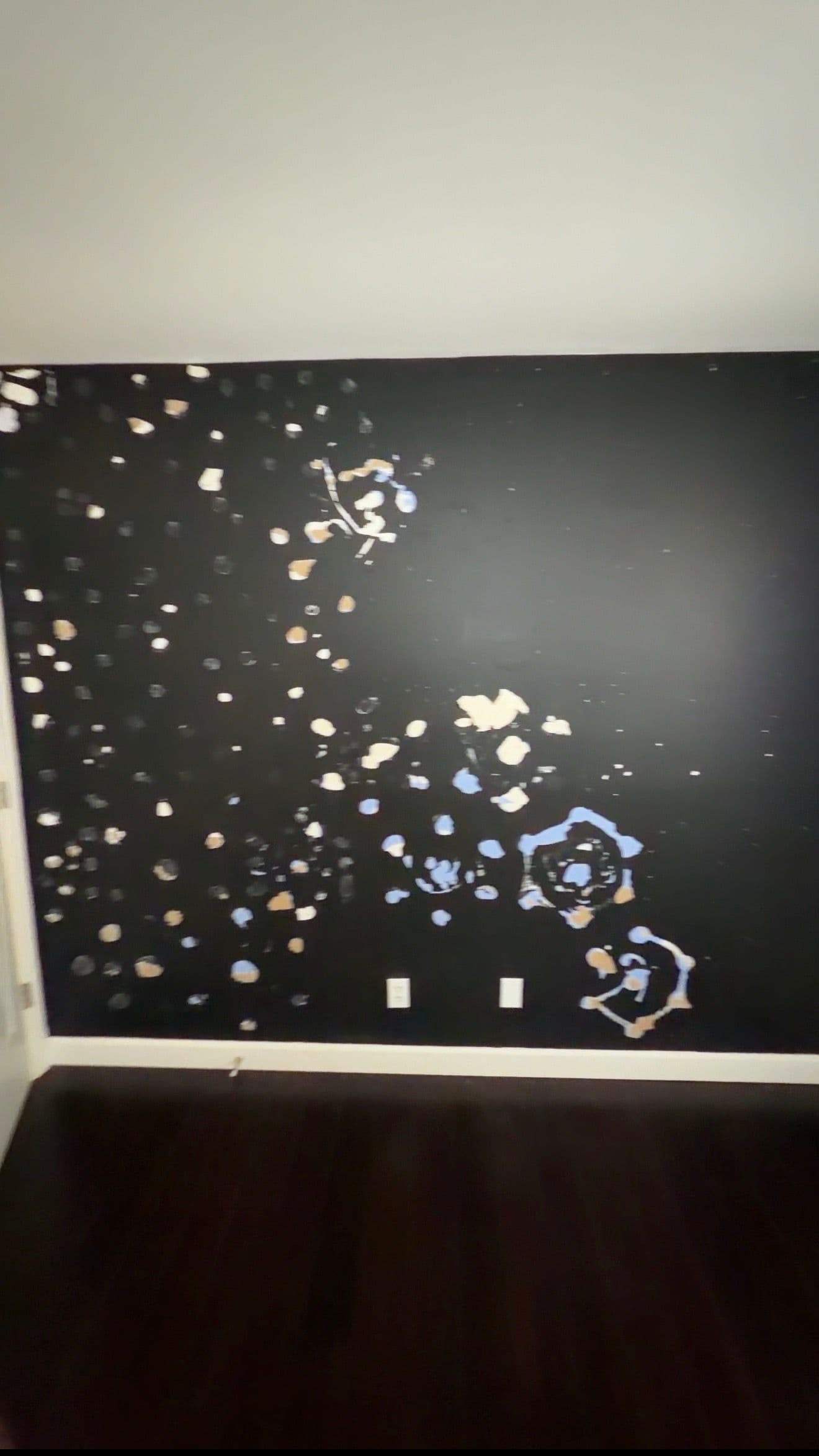
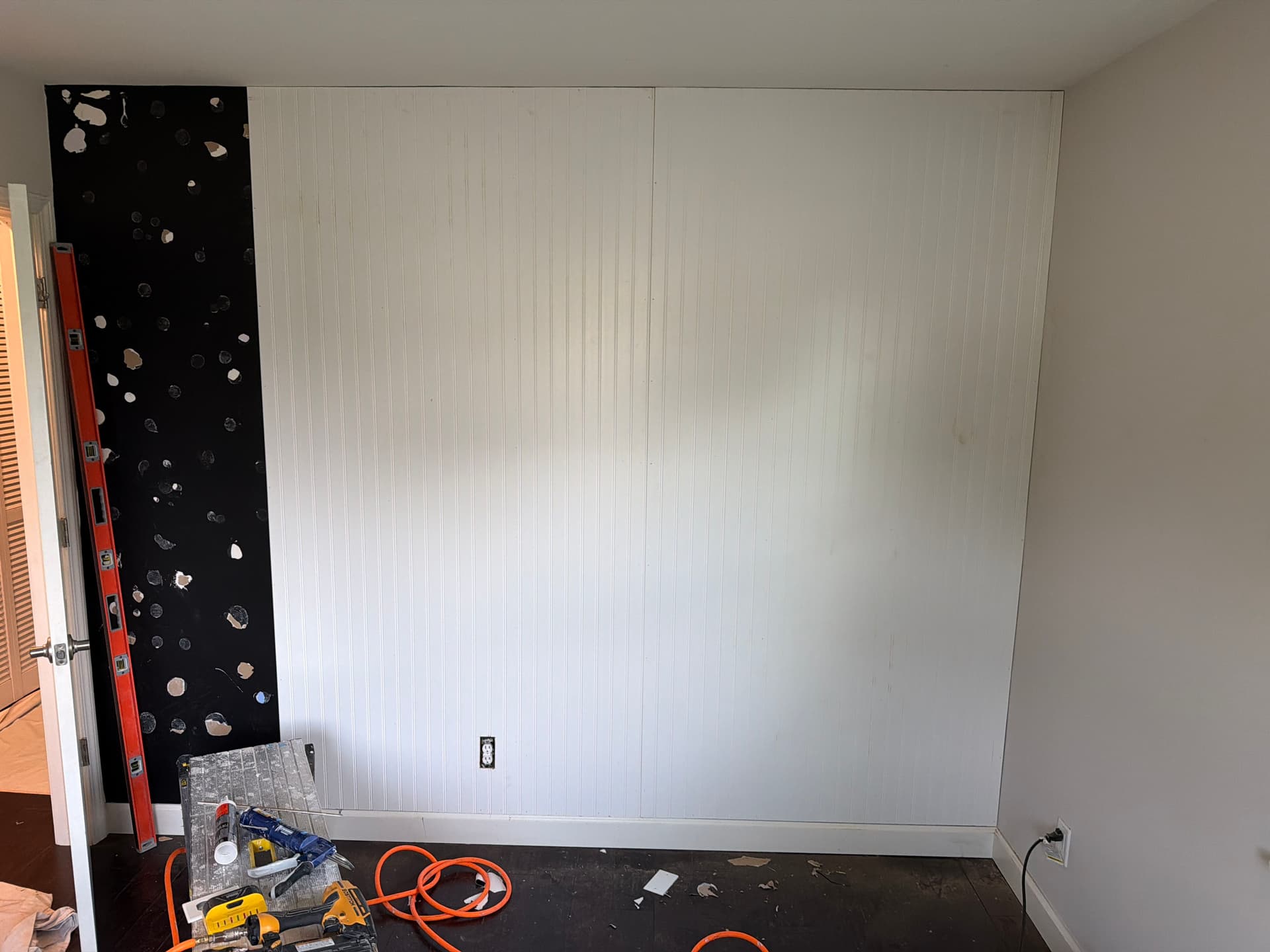
Here's what we were working with - a bold black mural wall that had seen better days. Peeling paint, damaged drywall paper, and exposed drywall underneath. Not exactly the kind of thing a buyer wants to walk into. The challenge here wasn't just cosmetic. When drywall paper gets torn up like that, it makes traditional patching and skim coating a bigger headache than it needs to be. So we went a different route.
Instead of fighting the wall surface, we installed paneling directly over it. Clean, flat, and ready to work with. That decision saved serious time and gave us a solid, uniform surface to build on - no ghost marks bleeding through, no uneven texture to fight.
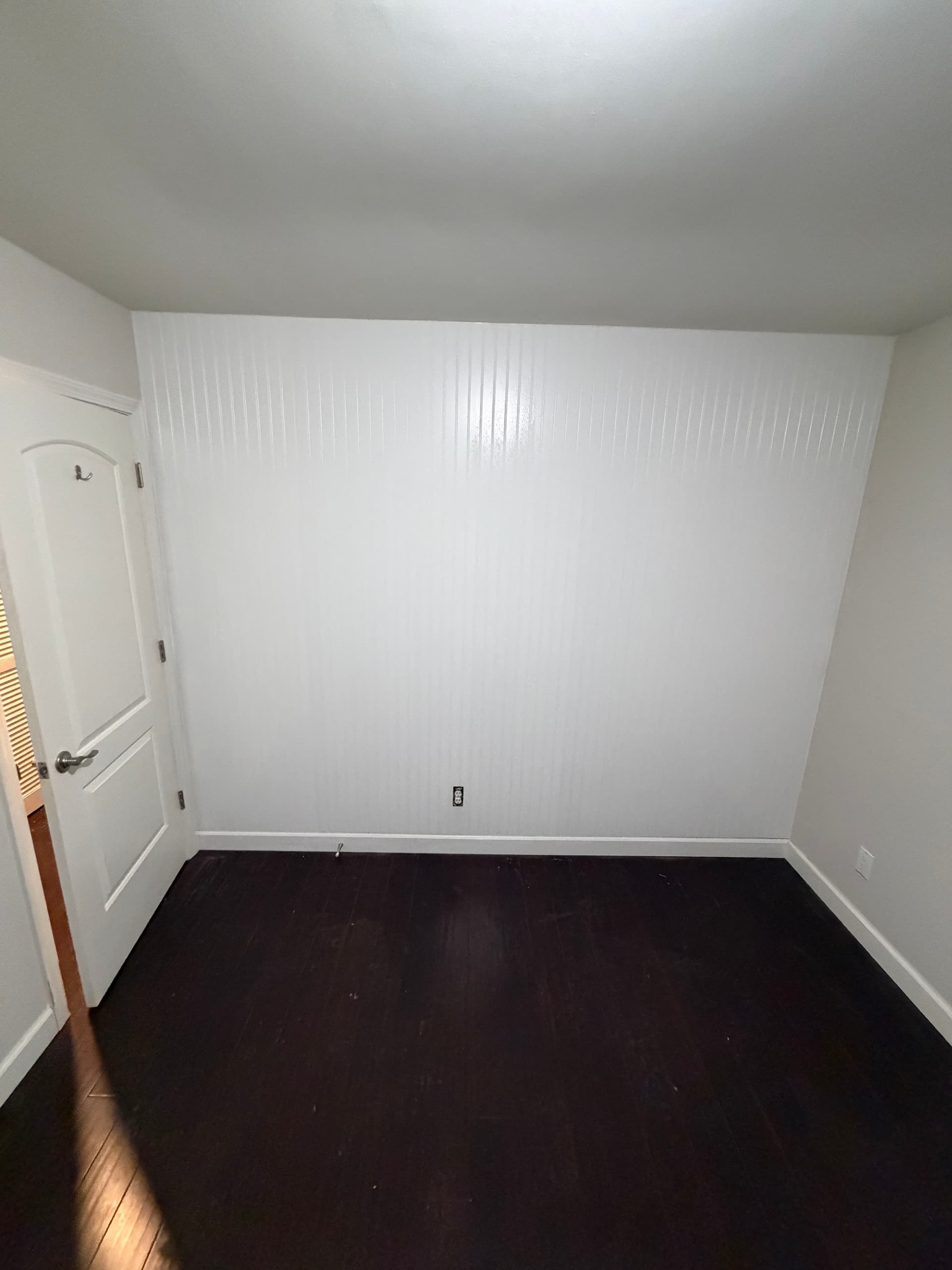
From there, it was a full prep process. We caulked every seam, puttied any imperfections, and applied primer before any paint touched the wall. That's the part most people skip - and it's exactly why some paint jobs fail fast. Primer on paneling isn't optional if you want a finish that actually holds.
The final coat of interior paint brought everything together. What you end up with is a wall that looks completely neutral and move-in ready. That matters a lot when a home is going to market. Buyers want to walk in and picture themselves there - not stare at damage or bold design choices from a previous owner. This kind of straightforward interior painting work is one of the fastest ways to shift how a room feels.
Not every wall problem needs a full drywall replacement or an expensive skim coat job. Sometimes the right call is to think differently about the solution, do the prep work properly, and let a clean paint finish do the rest.